Continuous Acoustic Surveillance for Static Infrastructure.
Predict Micro-Fractures & Weld Stress Before Failure.
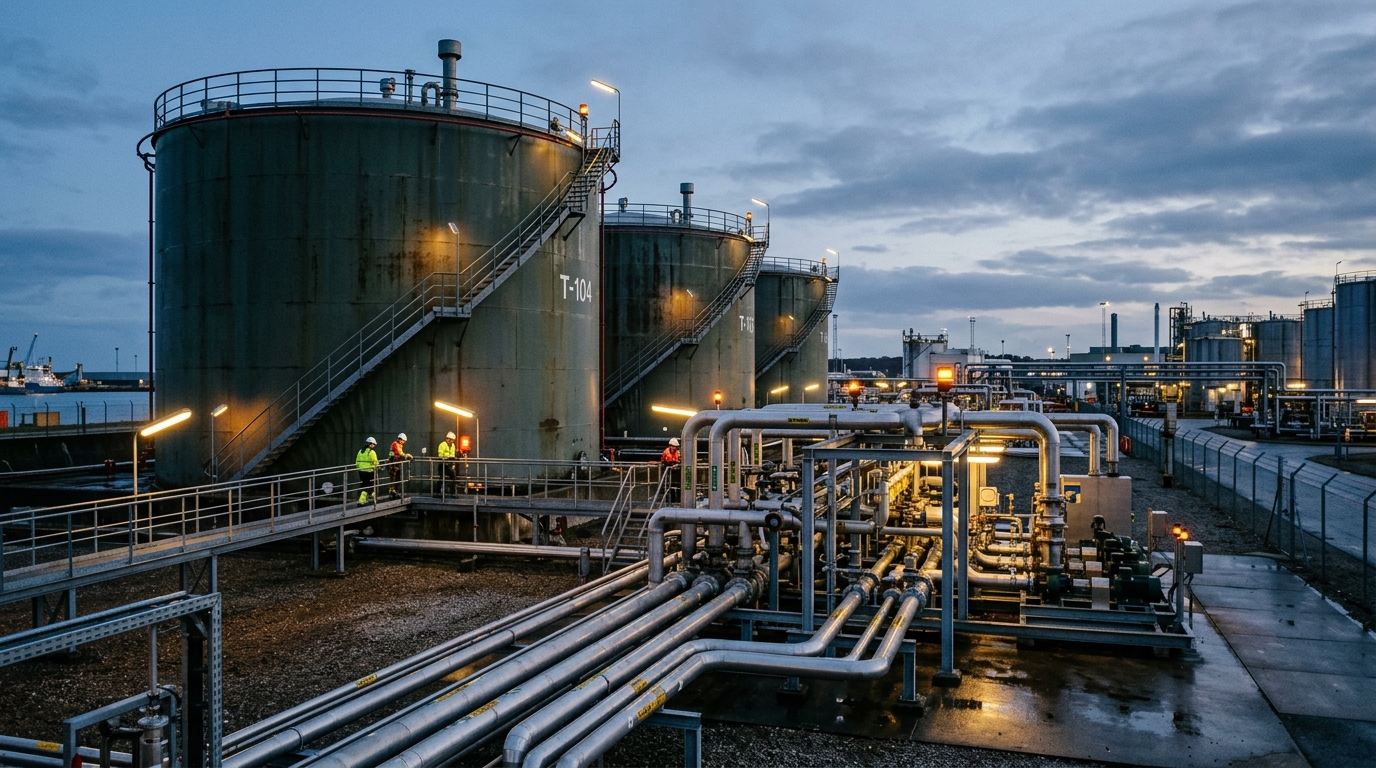
Updem delivers non-intrusive Acoustic Emission (AE) monitoring and edge telemetry for atmospheric storage tanks, pressure vessels, and critical process piping. Engineered in Tampere, Finland, our platform continuously screens active flaw growth under operational loads, providing plant reliability teams with verified integrity data weeks before scheduled turnarounds.
The 30-Day In-Service Pilot Implementation Cycle
Deploy non-intrusive acoustic emission surveillance on live atmospheric storage tanks (API 650/653) and pressurized process vessels with zero process downtime, zero degassing, and certified RBI integrity reporting.
Acoustic Attenuation Modeling & Array Blueprint
Before touching the asset, certified acoustic NDT specialists analyze your vessel General Arrangement (GA) drawings, shell plate thickness schedule, weld seams, product viscosity, and operating acoustic background to calculate ultrasound attenuation decay and map optimal sensor placement per API 650/653 Annex C.
Lamb wave dispersion calculation completed across 18mm carbon steel shell. Minimum signal-to-noise ratio: +18.4 dB at bottom annular plate perimeter.
External Live Magnetic Clamping & Waveguide Couplant
Certified technicians magnetically secure autonomous ATEX Zone 1 Monpod transducers to the lower shell course and annular ring. For hot operating surfaces up to +500°C, solid acoustic waveguides isolate sensors while maintaining microsecond acoustic transfer without welding, hot work permits, or plant shutdown.
Monpod transducer array coupled with silicone-elastomer couplant. Ultrasonic self-calibration pulse confirmed acoustic impedance match with shell metal.
Operational Cycle Baselining & Hydrodynamic Noise Filtering
Atmospheric storage tanks undergo dynamic acoustic changes across filling, settling, agitation, and solar heating cycles. Over 18 days of 100–400 kHz recording, Edge AI trains facility-specific wavelet threshold filters that suppress pump cavitation and pipeline turbulence while isolating transient micro-crack emissions.
Wavelet transform separates low-frequency pump cavitation (15–60 kHz) from true high-frequency acoustic emission crack bursts (150–350 kHz).
Integrity Triangulation & Turnaround Deferral Audit
Sensor time-of-arrival difference (Δt) planar algorithms triangulate active acoustic bursts to exact coordinates on the annular or sketch floor plates. Updem delivers an executive engineering audit assigning API 653 RBI Grades (A, B, or C) to provide regulatory justification for safely deferring costly tank overhauls.
Zero active corrosion bursts or leak acoustic signatures detected in annular bottom floor. Engineering recommendation: Safe to defer internal entry inspection by 5 years.
See Updem in Action: Digital Twin & Value Engine
Test how our physics-informed edge models detect microscopic stress fractures under full production without shutdowns, and model your facility's avoided downtime and turnaround savings in real time.
Facility Parameters
Adjust your operational parameters to model financial impact against industry failure benchmarks.
Projected Financial Impact & Payback
Model based on 14–30 day acoustic AI early warning & condition-based turnaround scope optimization.
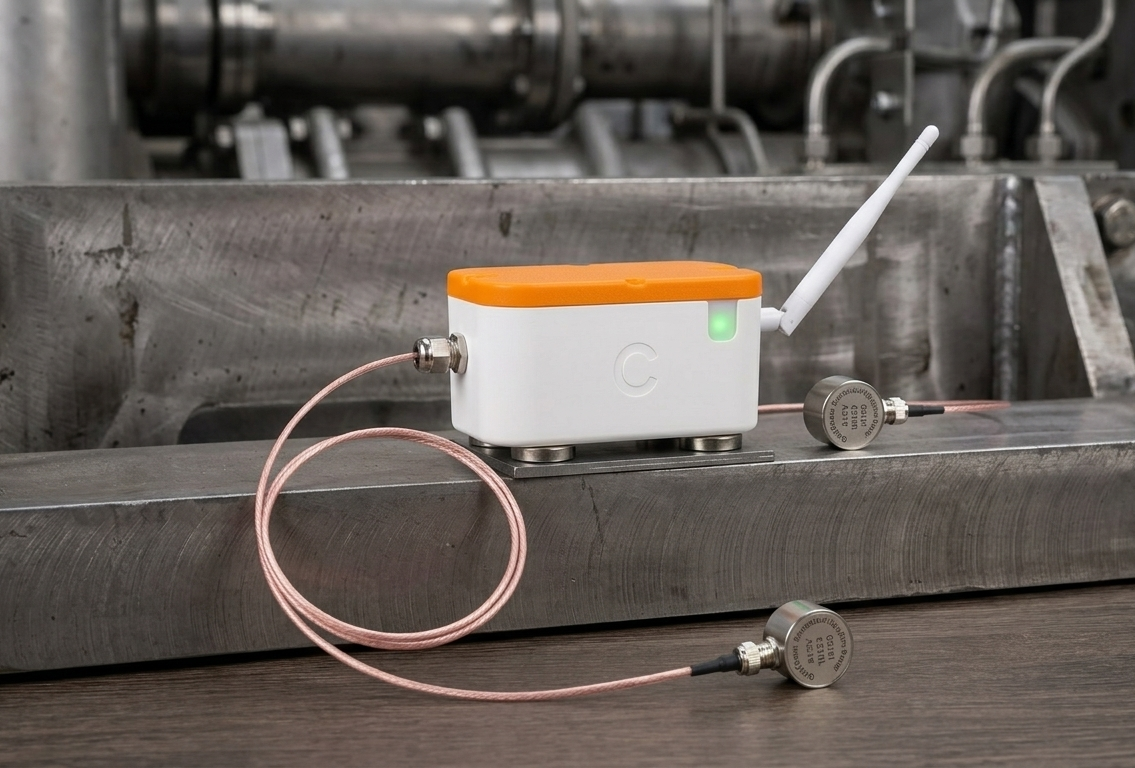
Meet the Monpod™. Edge AI sensing clamped in minutes.
When a micro-crack initiates in a tank bottom weld or vessel wall, dislocations release high-frequency elastic energy packets known as Acoustic Emission (AE). The Updem Monpod™ captures these microscopic stress waves without invasive drilling, hot work permits, or process shutdowns.
Equipped with high-pull magnetic mounting feet, the Monpod locks onto carbon steel pipes, structural beams, and tank shells. Shielded coaxial lines link the rugged IP-rated enclosure to differential piezoelectric transducers tuned to the 100 kHz to 1 MHz ultrasonic bandwidth to capture micro-crack acoustic emission signatures that standard vibration sensors miss.
Onboard edge processors calculate rolling energy, hit rates, and peak amplitude in real time, transmitting clean scalar telemetry over long-range wireless directly to our cloud predictive maintenance platform.
Review Monpod Engineering Specs →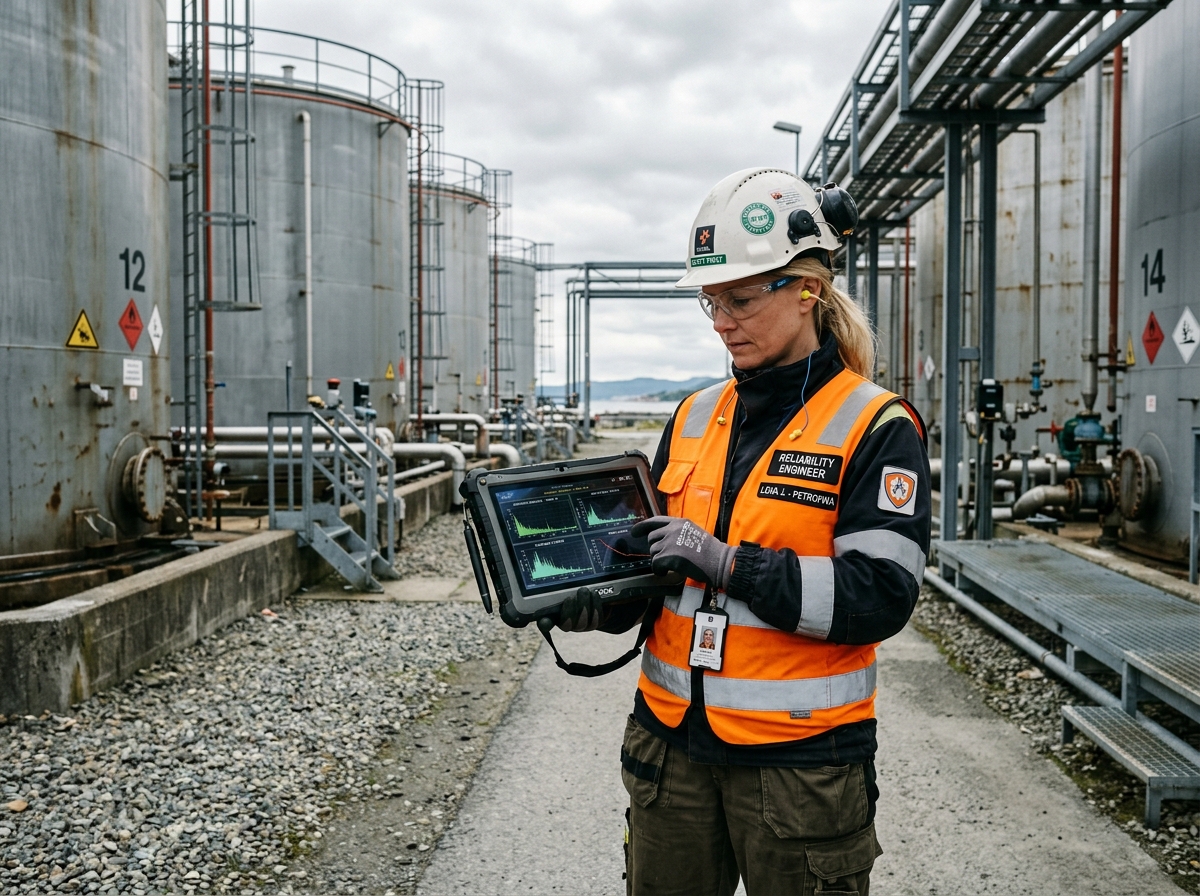
Built for plant reliability engineers, powered by explainable AI.
Industrial reliability engineers don't need another noisy dashboard with 40 blinking indicators and unexplained anomaly scores. Alarm fatigue is a real hazard on the plant floor.
The Updem Cloud Platform pairs with Monpod hardware to deliver explainable, physics-grounded predictive maintenance:
- Dynamic Asset Baselining: Learns the normal operational acoustic signature for each specific tank, reactor, or pipe segment during steady-state production.
- Explainable Anomaly Alerts: When acoustic activity drifts, alerts clearly state the physical driver: "AE energy and hit rate rose 4x above baseline in the 150 to 300 kHz band over 6 hours."
- Closed-Loop Feedback: Maintenance teams confirm or dismiss alerts with a single click, continuously refining the site baseline and eliminating false alarms.
- Universal Multi-Sensor Ingestion: Our cloud platform is protocol-agnostic. In addition to Monpod acoustic telemetry, it ingests data from third-party vibration sensors, temperature probes, line pressure gauges, and ultrasonic meters via MQTT, HTTPS, OPC UA, and Modbus TCP.
What We Protect
Specifically engineered for static pressure equipment and containment where catastrophic mechanical loss cannot be tolerated.
Atmospheric Storage Tanks
Detect bottom plate corrosion pitting, annular ring weld fatigue, and foundation settlement stress without draining or degassing product.
Learn more →Reactors & Heavy Vessels
Continuous monitoring for hydrogen-induced cracking (HIC), stress-corrosion cracking (SCC), and thermal fatigue up to 500°C.
Learn more →Pipelines & Steam Conduits
Acoustic micro-leak detection and weld creep surveillance along critical transfer manifolds, steam headers, and penstocks.
Learn more →Evaluate continuous acoustic monitoring on your critical assets.
We begin with a technical feasibility assessment of your target vessel geometry, operating temperatures, and baseline background noise.